You launch a campaign, leads roll in, and the CFO asks the simple question with a brutal edge: “So… what actually drove this?” You open your dashboard and see three different answers depending on the tool. Meanwhile, cookies are fading, platforms keep changing the rules, and your team is stitching reports together like it’s a middle-school science fair poster.
An AI marketing stack can bring clarity. However, it only works if you design it for measurement, governance, and workflow, not novelty. Let’s build something that holds up under scrutiny.
In this article you’ll learn
What a solid AI marketing stack includes, how to reduce attribution noise with first-party data, the checklist to evaluate tools, the mistakes to avoid, and a simple 7-day plan.
What an AI marketing stack is (and why “more tools” makes it worse)
Your AI marketing stack is the set of connected systems that use AI to help you collect, interpret, and act on marketing signals. It’s not just “AI copywriting + a chatbot.” In contrast, a real stack has clear ownership, data contracts, and feedback loops.
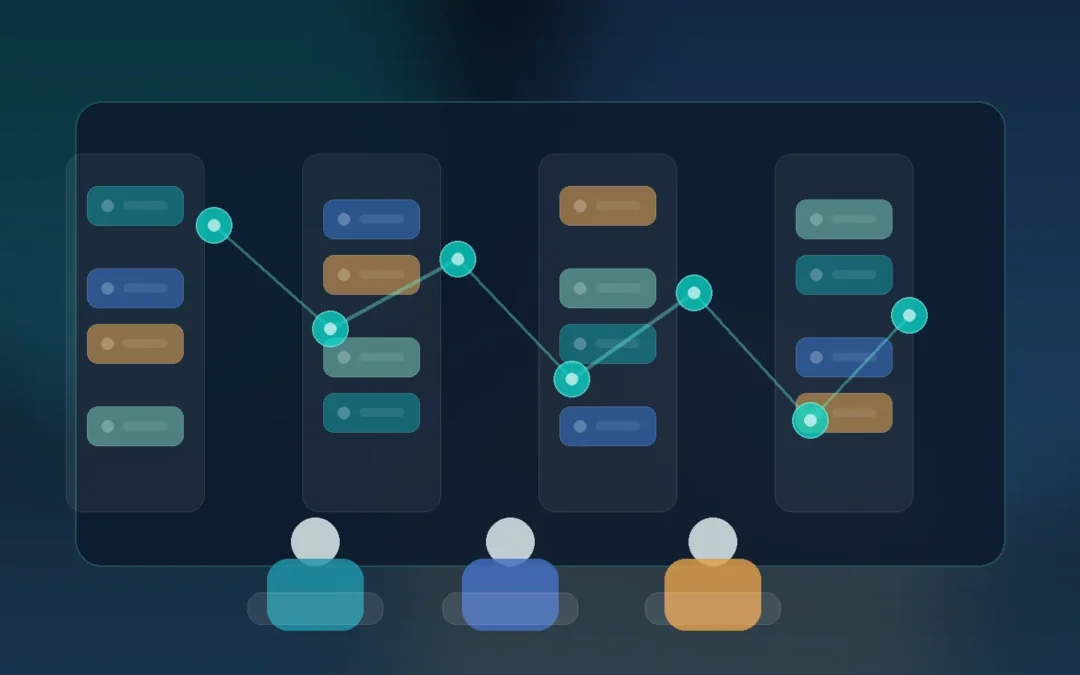
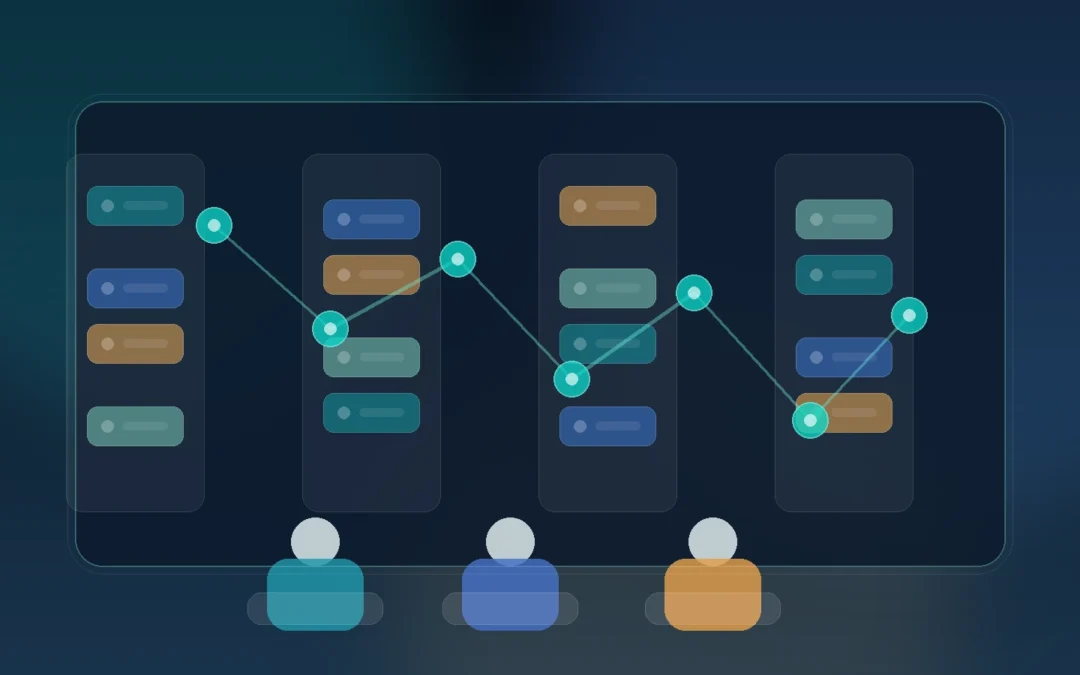
Here’s the mental model that keeps teams sane: you’re building a closed-loop system. Inputs go in (first-party events, CRM changes, ad platform costs). Decisions come out (budget shifts, creative variants, audience exclusions). Then results feed back in.
- Good stack: fewer tools, tightly integrated, shared definitions
- Bad stack: many tools, duplicated tracking, conflicting attribution models
McKinsey State of AI is a useful baseline for how teams operationalize AI.
The trend-driven problem: attribution is getting noisier, not cleaner
Attribution used to be “messy but manageable.” Now it’s “messy and political.” As a result, your AI layer must handle uncertainty and still produce decisions you can defend.
Three things are driving the chaos:
- Signal loss: cookie restrictions and device-level limits reduce deterministic tracking.
- Walled gardens: platforms grade their own homework, and reporting is sampled or modeled.
- Definition drift: “lead,” “MQL,” and “pipeline” mean different things across tools.
So, the goal shifts. You’re not chasing perfect credit assignment. Instead, you’re building decision-grade measurement that’s consistent, explainable, and repeatable.
FTC business guidance helps you sanity-check privacy and advertising basics.
Framework: the Decision-Grade AI Marketing Stack Checklist
Use this checklist before you buy or rebuild anything. It’s designed to prevent the most costly outcome: a stack that produces outputs nobody trusts.
1) Data layer: make first-party events the source of truth
- Define 15 to 30 core events you will trust (signup, demo request, checkout, activation, churn).
- Standardize UTM rules and naming conventions so AI doesn’t learn junk.
- Set retention and consent rules. Keep a simple audit trail.
2) Identity and CRM: enforce one definition of a customer
- Pick one system to be your lead and account authority, usually the CRM.
- Decide how you handle duplicates, households, and shared inboxes.
- Track lifecycle stages with dates, not just current status.
3) Measurement: pick a model mix that matches reality
- Platform attribution for in-platform optimization signals.
- Multi-touch or rules-based attribution for directional journey insights.
- Incrementality tests for “did it work at all?” validation.
4) Activation: automation that changes outcomes, not just reports
- Budget shifts based on guardrailed thresholds.
- Audience updates synced from CRM stages.
- Creative iteration based on approved brand patterns.
5) Governance: the overlooked layer that saves your job
- Role-based access and approval flows.
- Prompt and template libraries for repeatable content outputs.
- Logging: what changed, when, and why.
To keep this practical, start with a one-page map of your current tools and owners. Then share it in one place. Promarkia’s blog can host the public-facing version.
Two real-world mini case studies (what changes when you do it right)
These are composites based on common implementation patterns. Names are fictional, but the situations are very real.
Case study 1: B2B SaaS team drowning in “lead source” arguments
A 12-person B2B marketing team ran paid search, LinkedIn, webinars, and partner campaigns. Every month, pipeline numbers moved, but nobody agreed on why. Sales blamed lead quality. Marketing blamed follow-up speed.
What they changed:
- Locked a single lifecycle stage definition in the CRM.
- Created a clean event taxonomy for demo requests and activations.
- Used AI to generate weekly variance notes that explained changes in plain English.
Result: exec meetings shifted from “whose number is right?” to “which lever are we pulling next?” That saved hours and reduced budget whiplash.
Case study 2: eCommerce brand with creative volume but no learning
An eCommerce team produced tons of ads. However, their creative testing was basically vibes. They couldn’t connect creative themes to revenue because data was scattered and naming conventions were inconsistent.
What they changed:
- Introduced a creative naming system that captured hook, offer, and audience.
- Automated a daily rollup that tied spend to theme-level performance.
- Used AI to suggest next tests from winners, with brand-safe templates.
Result: fewer creatives shipped, but each one taught them something. ROAS improved because learning improved.
Try this: a 60-minute stack sanity test
If you’re not sure whether your AI marketing stack is helping, run this quick test with one campaign.
- Pick one objective: pipeline, trials, purchases, or retention.
- Pick one truth source: CRM opportunity creation, checkout event, or subscription activation.
- Trace the path: ad click to landing page to event to CRM record.
- Compare three views: ad platform, analytics, CRM reporting.
- Write down mismatches: names, timestamps, missing UTMs, duplicate leads.
Moreover, document the top five mismatches and fix only those first. That’s usually where most distrust starts.
Common mistakes that quietly break your stack
- Automating before standardizing: AI can scale mess faster than humans can clean it.
- Letting each channel define success: you end up with incompatible scorecards.
- Ignoring consent and retention: then you rebuild under pressure later.
- No human approval gates: one off-brand output becomes a screenshot forever.
- Chasing single-touch truth: it encourages politics, not learning.
Risks: what can go wrong (and how to protect yourself)
AI can improve marketing operations. Still, it introduces new failure modes. Plan for them up front.
- Compliance risk: using non-consented data in targeting or modeling. Mitigation: keep a consented first-party event layer and retention rules.
- Brand risk: generated content that’s inaccurate or off-tone. Mitigation: brand templates, approvals, and fact-check steps.
- Security risk: sensitive data leaking into tools without controls. Mitigation: vendor review, access controls, and redaction.
- Measurement risk: AI explains results using flawed definitions. Mitigation: a shared metric dictionary and monthly reconciliation.
NIST AI RMF is a solid way to think about AI risk and controls.
What to do next (a practical 7-day plan)
You don’t need a six-month rebuild to get value. Instead, you need a focused sprint that creates trust.
- Day 1: Write your metric dictionary. One page.
- Day 2: Lock your core events. Choose what matters.
- Day 3: Clean UTM rules and naming. Make tagging boring.
- Day 4: Build one decision dashboard tied to one outcome.
- Day 5: Add one automation. For example, pause ads when qualified conversions fall below a threshold.
- Day 6: Add governance: approvals, access, and logging.
- Day 7: Run a postmortem. Ask what you decide faster now.
If you want a lightweight way to document responsibilities, publish a short “stack owner” note. Then link it from your team wiki. This blog can host your public companion pieces.
FAQ
1) Do I need a CDP to build an AI marketing stack?
Not always. If you have clean first-party events and a disciplined CRM, you can go far. However, a CDP helps when identity and activation are fragmented across many systems.
2) What’s the minimum viable AI marketing stack?
One analytics layer, one CRM, and one automation path that changes something in-market. Add AI where it reduces cycle time or improves decisions, not where it looks fancy.
3) How do I keep AI outputs on-brand?
Use templates, example libraries, and approvals. Also, restrict generation to approved claims, offers, and product facts.
4) Can AI fix attribution by itself?
No. AI can model and explain. Still, you need strong event design, definitions, and testing to avoid confident nonsense.
5) What should I measure if attribution is unreliable?
Track a mix: leading indicators (CTR, CVR), business outcomes (pipeline, revenue), and incrementality signals. Then keep definitions stable for at least a quarter.
6) How do I choose tools without creating tool sprawl?
Choose one system of record per function. Then require integrations and shared definitions before any new tool is approved.
Further reading
- McKinsey’s “State of AI” research for adoption patterns and operating models
- NIST’s AI Risk Management Framework for governance and documentation
- FTC business guidance for privacy and advertising compliance basics
- Your analytics and CRM vendor documentation for event tracking, identity, and data retention